
Solar Panel for Aircon: How Many Panels, What Battery and Inverter for 1HP to 2HP
Last checked · JH Solar guide

A solar panel for aircon setup is a common reason Filipino homes look at solar. The aircon is often the biggest load on the bill, especially in the hot months. This guide shows how to size the panels, battery and inverter for a 1HP, 1.5HP or 2HP unit, using the watts on your own label.
Every number here is either from your label or a clearly marked example. Replace the example draw with your own figure and the method still works.
Solar Panel for Aircon: What It Takes
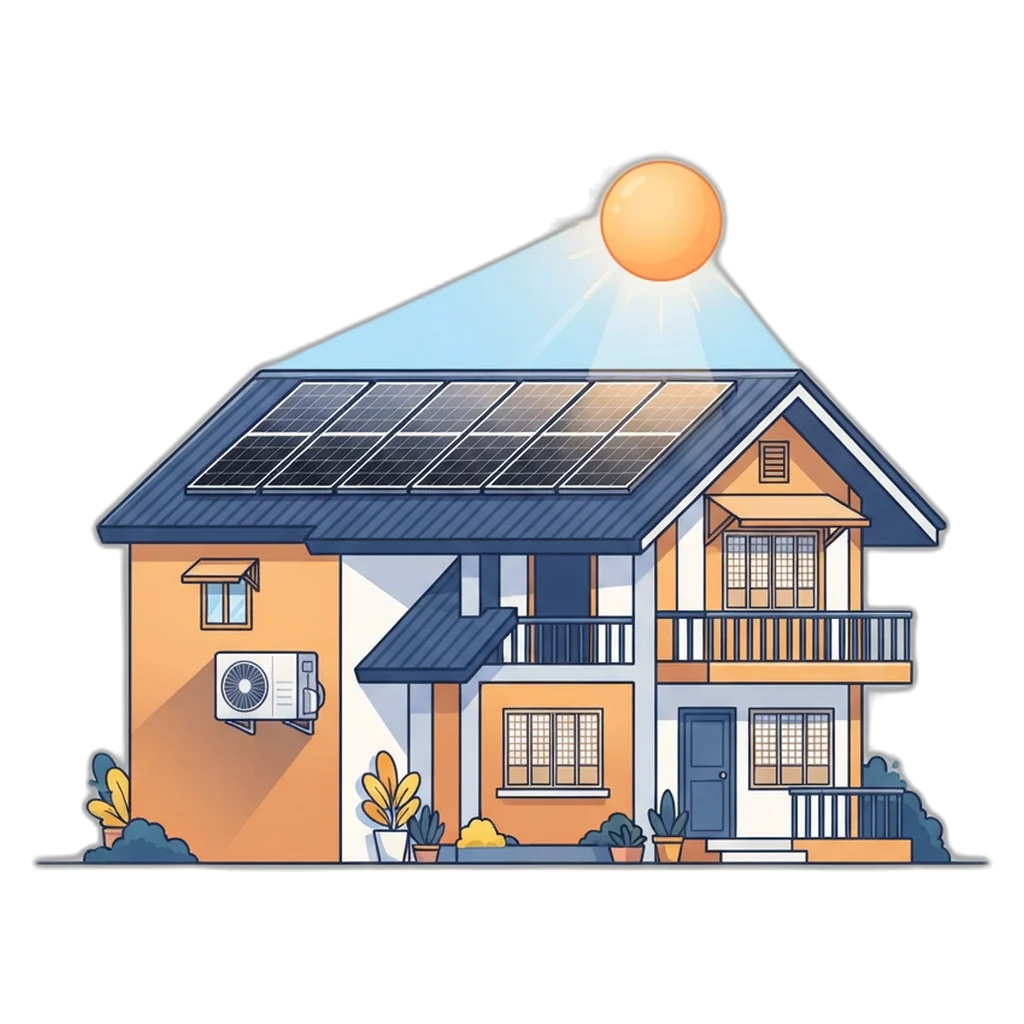
Running an aircon on solar needs more than a few panels. A complete solar panel for aircon system has four parts: panels that make the energy, an inverter that turns it into household AC power, protection devices such as breakers and surge protection, and, if you want cooling at night or during brownouts, a battery.
People look this up for three reasons. The aircon is often the largest share of the bill. Rates change every month, so the cost is hard to plan. And during a brownout, a hot room is the first thing people want to fix. Solar can help with all three, but only if it is sized for the real load.
If you want the full picture of how panels, a battery and the grid connect, our hybrid solar system diagram shows each part and where it goes.
Can one solar panel run an aircon?
Not on its own. Example: a 720 W panel at a 0.75 overall factor gives roughly 540 W in strong midday sun, and less in the morning, late afternoon or under clouds. A 1HP inverter type averaging 800 W needs more than that, and the compressor needs steady power, not a supply that rises and falls with every cloud. A working solar panel for aircon system uses several panels plus an inverter, and either the grid or a battery to smooth the supply.
Which setup type fits aircon use
- Grid-tied: panels run the aircon in the daytime and the grid fills gaps. It gives no backup in a brownout, because a grid-tied inverter shuts down when the grid is off. See our on-grid system guide for how it connects.
- Hybrid: panels, a battery and the grid work together. This is the common choice for a home that wants aircon on solar plus cooling during brownouts.
- Off-grid: no grid at all, so the battery and panels must cover every hour, including rainy weeks. For aircon, that usually means a very large battery.
Horsepower vs Watts: Read the Label First
The first step in any solar panel for aircon plan is finding the real power draw. Aircon “HP” is not the same as electrical power. In aircon sales, horsepower is a cooling-capacity class: it tells you roughly what room size the unit can cool. It does not tell you how many watts the unit pulls from the outlet.
The real electrical draw depends on three things:
- The label: the rated power input (in watts) is printed on the unit’s nameplate and the energy guide label. That is your starting number.
- Inverter vs non-inverter type: a non-inverter unit switches its compressor fully on and off. An inverter type slows down once the room is cool, so its average draw is usually lower than its rated input.
- Room heat: a room with a hot roof, west-facing windows or open doors makes the compressor work harder and longer.
So two “1HP” units can draw quite different watts. Always use the figure from your own unit, not a number from a chart.

How to Compute Aircon Energy Use for Solar
Sizing a solar panel for aircon setup follows the same method we use for any load. Energy in kWh is watts times hours, divided by 1,000. Here is the step-by-step version. You can also run these numbers in our solar computation tool, which does the math for you.
Step 1: Find the watts
Read the rated power input on the label. For an inverter type, the average draw is often lower.
Step 2: Count the hours
Note how many hours a day the aircon runs, and whether that is daytime, night, or both.
Step 3: Work out daily kWh
Example: 800 W × 8 h ÷ 1,000 = 6.4 kWh per day.
Step 4: Size the panels
kWp = daily kWh ÷ (peak sun hours × 0.75). Example: 6.4 ÷ (4 × 0.75) ≈ 2.13 kWp. Divide by the panel size and round up: 2.13 ÷ 0.72 ≈ 2.96, so 3 panels of 720 W.
Step 5: Size the battery (for night use)
Nominal kWh = backup kWh ÷ (0.80 × 0.90). Example: 6.4 ÷ 0.72 ≈ 8.89 kWh.
Step 6: Size the inverter
Add up everything that runs at the same time, then allow for the compressor’s start-up surge.
The 4 peak sun hours and 0.75 overall factor are example assumptions. Peak sun hours in the Philippines are typically about 3.5 to 5 a day depending on place and season. Check your own city on the Global Solar Atlas and adjust.
Daytime-Only vs Night Aircon
When you use the aircon matters as much as how big it is. A daytime-only solar panel for aircon setup can run the unit straight from the panels while the sun is up, with the grid filling the gaps. Night use is different: all of that energy has to be stored in a battery first, and the battery size jumps.
| When it runs | Daily energy | Panels (720 W, example) | Battery needed |
|---|---|---|---|
| Daytime only, 8 h | 6.4 kWh | ≈ 2.13 kWp → 3 panels | None for the aircon (grid covers clouds) |
| Night only, 8 h | 6.4 kWh | ≈ 2.13 kWp → 3 panels, plus margin for charging losses | ≈ 8.89 kWh nominal |
| Day and night, 16 h | 12.8 kWh | ≈ 4.27 kWp → 6 panels | ≈ 8.89 kWh nominal for the night half |
Example assumptions: 4 peak sun hours, 0.75 overall factor, battery 0.80 usable × 0.90 efficiency. Replace 800 W with your own label figure.
Notice that moving the same 8 hours from day to night does not change the panel count much, but it adds a battery of almost 9 kWh. That is why many households run the aircon on solar in the afternoon and accept grid power late at night, or keep battery backup for brownouts only. Our guide to solar batteries explains usable vs nominal kWh in more detail.
1HP, 1.5HP and 2HP Worked Examples
The table below shows solar panel for aircon sizing for three common classes. These are examples. The “assumed average draw” column is an assumption: 800 W for a 1HP inverter type is the figure from our records, and the 1.5HP and 2HP draws simply scale it up. Replace each draw with the figure on your own label.
| Aircon class | Assumed average draw (replace with your label) | Daily energy | Array size | Panels at 720 W | Battery for 8 h at night (nominal) |
|---|---|---|---|---|---|
| 1HP inverter type | 800 W (assumption) | 6.4 kWh | ≈ 2.13 kWp | 3 panels | ≈ 8.89 kWh |
| 1.5HP inverter type | 1,200 W (assumption) | 9.6 kWh | ≈ 3.20 kWp | 5 panels | ≈ 13.33 kWh |
| 2HP inverter type | 1,600 W (assumption) | 12.8 kWh | ≈ 4.27 kWp | 6 panels | ≈ 17.78 kWh |
Formulas: kWh = W × 8 h ÷ 1,000; kWp = kWh ÷ (4 × 0.75); panels = kWp ÷ 0.72 kW, rounded up; battery = kWh ÷ (0.8 × 0.9). Aircon only; add your other loads.
Two things stand out. First, every step up in class adds panels and battery quickly, so the label figure matters. Second, these numbers cover the aircon only. Your refrigerator, lights, fans and electronics add to the total, so size the whole house, not just the aircon.
Two or more aircon units
With two units, add their energy together. Example: a 1HP unit (800 W) and a 1.5HP unit (1,200 W), each running 8 hours, use 6.4 + 9.6 = 16 kWh a day. That is 16 ÷ 3 ≈ 5.33 kWp, or 8 panels of 720 W after rounding up. If both run at night, the battery would need about 16 ÷ 0.72 ≈ 22.2 kWh nominal, which is why a solar panel for aircon plan for several rooms often keeps night cooling on the grid.
Inverter Size and Compressor Start-Up Surge
The inverter is sized in kW (power at one moment), not kWh (energy over time). For a solar panel for aircon system, it must handle the highest load running at once, plus the short start-up surge of the compressor. The US Department of Energy’s inverter basics page explains what the inverter does in a solar system.
| Load | Assumed running watts |
|---|---|
| 1.5HP inverter-type aircon | 1,200 W (assumption) |
| Refrigerator | 150 W (assumption) |
| Lights and electric fans | 200 W (assumption) |
| TV and Wi-Fi router | 150 W (assumption) |
| Total running at once | 1,700 W |
Example only. Read the watts on each of your own appliances. The inverter must also cover the compressor's start-up surge.
In this example, the inverter’s continuous rating must be above 1.7 kW, and its surge rating must cover the compressor starting while everything else runs. Our solar computation tool adds a 25% headroom margin by default (you can change it): 1,700 W × 1.25 ≈ 2.1 kW as an example starting point. Non-inverter units usually have a harder start than inverter types. Check the aircon’s datasheet for its starting current, and let the installer match it to the inverter’s surge rating. Our solar inverter sizing guide explains continuous and surge ratings in more detail.
How JH Solar Version 1 and Version 2 Compare for Aircon
If you are planning a solar panel for aircon setup, our two all-in-one systems differ mainly in inverter size and solar input. Version 1 is rated 7 kW with a 16.38 kWh battery and 6 panels of 620 W (3.72 kWp). Version 2 is rated 11 kW with a 15.36 kWh battery and 14 panels of 720 W (10.08 kWp). For aircon loads, Version 2 is the one we would look at first.
| Aircon class | Assumed average draw | Version 1 (example) | Version 2 (example) |
|---|---|---|---|
| 1HP inverter type | 800 W (assumption) | ≈ 14.7 h | ≈ 13.8 h |
| 1.5HP inverter type | 1,200 W (assumption) | ≈ 9.8 h | ≈ 9.2 h |
| 2HP inverter type | 1,600 W (assumption) | ≈ 7.4 h | ≈ 6.9 h |
Example: 16.38 or 15.36 kWh × 0.8 × 0.9 ≈ 11.79 or 11.06 kWh to AC loads, divided by a constant aircon draw with nothing else running. Real runtime changes with load, heat and battery age.
The batteries are close in size, so the difference shows in daytime charging. By the same method, the 10.08 kWp array makes about 30.2 kWh on an example day (× 4 peak sun hours × 0.75), enough for a 2HP example of 12.8 kWh with room for other loads on a good day. The 3.72 kWp array makes about 11.2 kWh, which covers the 1HP example but not a full 2HP day plus the rest of the house. See the JH Solar Version 2 unit for aircon homes; Version 1 suits lighter loads and night backup.
Tips to Cut the Aircon Load Before Adding Panels
Every watt you save is a watt you do not have to buy panels and battery for. Before you size a solar panel for aircon system, try these:
- Raise the thermostat a little. A slightly higher setting, with a fan moving the air, lowers how hard the compressor works.
- Choose an inverter type when you replace an old unit. Compare the energy guide labels in the store.
- Insulate and shade the room. Roof insulation, curtains on west windows and closed doors keep heat out.
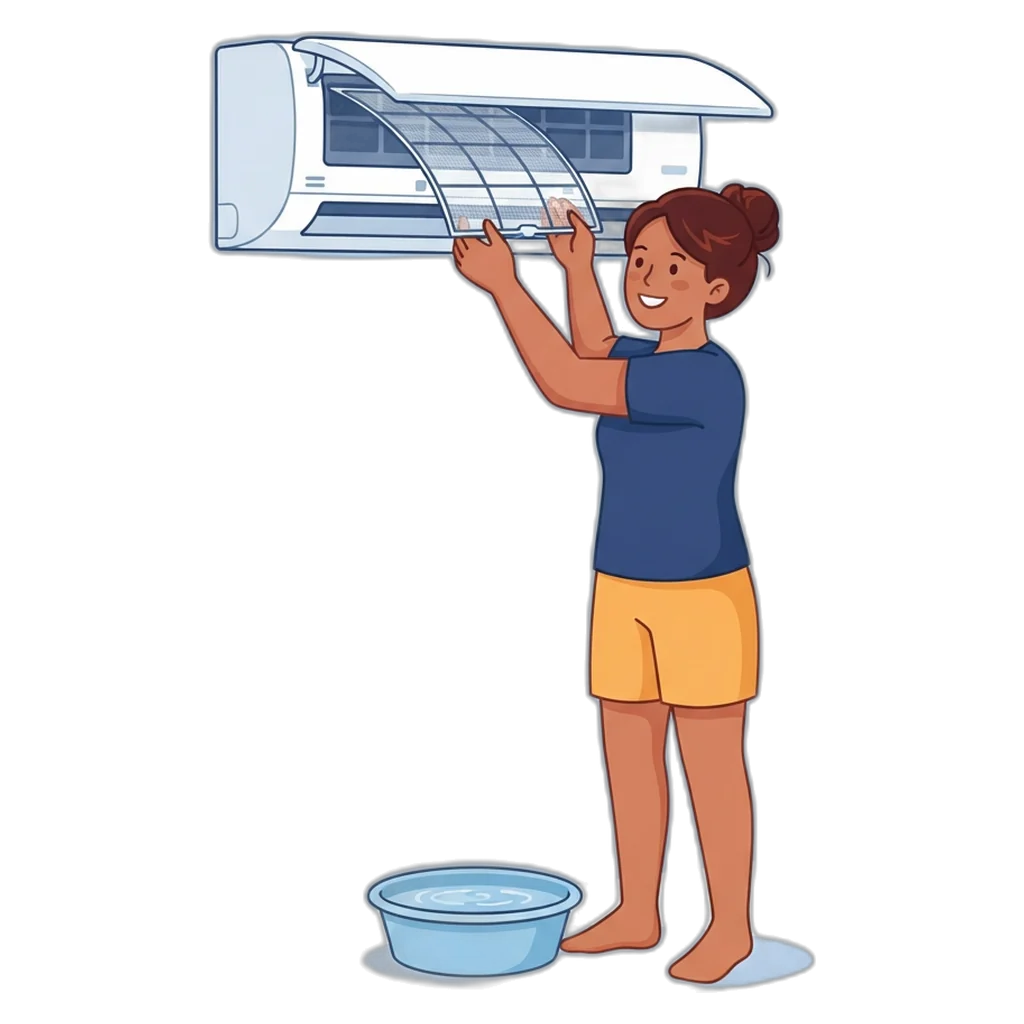
- Clean the filters regularly and have the unit serviced. Dirty filters and coils make the unit run longer.
- Size the aircon to the room. An undersized unit runs flat out; ask the dealer to check.
- Use a timer so the aircon is not running in an empty room.
Benefits and Limits of Running Aircon on Solar
Benefits: the aircon runs mostly in the hottest, sunniest hours, which is exactly when panels produce the most. That match makes daytime aircon one of the better uses of solar. With a battery, you also get cooling during brownouts.
Limits: a solar panel for aircon plan that covers night use needs a large battery, which adds cost. Cloudy weeks reduce output. Start-up surge can trip an undersized inverter. And savings depend on your rate, your use and your system; nobody can promise a fixed figure.
Philippine Context: Hot Season, Rates and Brownouts
In the Philippines, aircon use climbs in the hot, dry months, roughly March to May, and so do bills. PAGASA’s weather updates are a good guide to the season. Rates from Meralco and electric cooperatives change monthly; the DOE electricity rates page tracks them.
To see what your aircon costs, multiply its daily kWh by the rate on your bill. Example only: at ₱12 per kWh, 6.4 kWh × ₱12 = ₱76.80 a day. Use your own rate, since it changes every month. Brownouts in the hot season also make battery backup more valuable for aircon homes. Heat also lowers panel output, which the example 0.75 factor is meant to help cover. A solar panel for aircon plan should also allow for typhoon-rated mounting and the rainy season’s weaker output.
On your phone
Most of the homework for a solar panel for aircon quote can be done from your phone:
- Photograph the aircon nameplate and energy guide label so you have the watts on hand.
- Use your phone’s timer or the aircon app to log how many hours it runs for a week.
- Take a photo of your bill’s kWh line and rate per kWh for the calculator.
- Save the sizing results as a screenshot before you ask for quotes.
Safety and Electrical Reminders
- An aircon circuit carries high current. Wiring an aircon to an inverter or battery system must be done by a licensed electrician (RME or PEE) under the Philippine Electrical Code.
- Never plug an aircon into a small portable unit or inverter that is not rated for its surge.
- Use a dedicated breaker and correctly sized cable for each aircon circuit.
- Do not open the aircon or the inverter yourself. Capacitors inside can hold a dangerous charge even after the power is switched off.
- Panels make DC voltage whenever light hits them. Never unplug panel connectors under load or work on live DC wiring; leave that to the installer, who switches off the DC disconnect first.
- After a typhoon, have the roof panels and mounting checked before the system is used heavily.
Solar panels make DC power whenever light hits them, and batteries hold enough energy to start a fire if they are shorted. Work on the grid side, the AC panel board or a net-metered system belongs to a licensed electrical practitioner following the Philippine Electrical Code. Our numbers are estimates, not a design or a quote.
Frequently Asked Questions
How many solar panels do I need to run a 1HP aircon?
Work it out from the label. Example: a 1HP inverter-type unit averaging 800 W for 8 hours uses 6.4 kWh. Divide by 4 peak sun hours × 0.75 to get about 2.13 kWp, which is 3 panels of 720 W after rounding up. Your own draw, hours and location will change the answer.
Can solar panels run an aircon without a battery?
Yes, during the day, if the system is a grid-tied or hybrid setup that can draw from the grid when a cloud passes. Panels alone cannot hold a steady supply for a compressor. A grid-tied system without a battery also shuts down during a brownout, so the aircon stops too. For night or brownout use, you need a battery.
Is an inverter-type aircon better for a solar setup?
Usually, yes. An inverter-type aircon slows its compressor down once the room is cool instead of switching fully on and off, so its average draw is lower and its start-up is gentler. That means fewer panels, less battery and less surge for the inverter to handle. Check the energy guide label to compare real figures.
Can I run my aircon all night on a solar battery?
It is possible, but the battery gets large fast. Example: 800 W for 8 hours is 6.4 kWh, and 6.4 ÷ (0.80 × 0.90) is about 8.89 kWh of nominal battery for that one unit. Your panels must also make that energy during the day to refill the battery, on top of your daytime use.
Why does my solar inverter trip when the aircon starts?
A compressor draws a short burst of extra current when it starts, called the start-up surge. If that burst plus everything else running is above the inverter’s surge rating, it trips or shuts down. Non-inverter units have a harder start. A licensed installer can check the surge rating, add a soft-start device if suitable, or size up the inverter.
Does a solar aircon setup still work on cloudy or rainy days?
It works, but the panels make much less power when the sky is heavy, and the rainy season can last for weeks. On those days the battery and the grid carry more of the load. That is why a hybrid setup with grid input is common for aircon homes, and why your sizing should not assume a sunny day every day.
Conclusion: Sizing a Solar Panel for Aircon the Right Way
A solar panel for aircon setup starts with the watts on your label, not the HP class. Multiply by your hours to get kWh, size the panels with peak sun hours and a loss factor, add a battery only if you need night or brownout cooling, and choose an inverter that covers the running load plus start-up surge.
Cut the load first, then size for the whole house. When you are ready, compare your numbers with an all-in-one system from JH Solar, and ask for a site assessment so the final design fits your roof.
Size solar for your aircon
Enter your bill and your aircon's label watts in our calculator, then send the results for a written quote.
Related Guides
- JH Solar HomeStart here: JH Solar systems and every guide on one page.
- Solar ComputationTurn your electric bill into a system size in a few taps.
- JH Solar ProductsOur two all-in-one units, side by side.
- Solar Battery GuideHow much battery you need for nights and brownouts.
- Hybrid Solar System DiagramSolar, battery and Meralco power working together.
- Solar Panel InstallationWhat happens on install day, and what comes before it.