Best Solar Panel Brand in the Philippines: A Buyer’s Checklist for 2026
Last checked · JH Solar guide
Looking for the best solar panel brand in the Philippines? Many DIYers and homeowners ask for a simple list of top names. The honest answer is shorter than a list: the best solar panel brand for you is the one that gives you a real datasheet, a warranty in writing, a local distributor and someone to call when something breaks.
This guide shows how to judge solar panel brands, inverter makers and battery makers, what “Tier 1” means, which well-known manufacturers to shortlist, and how to spot fake or relabeled products. We also cover heat, typhoons, salt air and service outside Metro Manila.
What Makes the Best Solar Panel Brand?
People search for the best solar panel brand because a solar system is a big purchase that should last for decades, and a brand name feels like a shortcut to quality. It can be, but only when the brand backs its product with paperwork and people.
Use the five tests below. They work the same way for panels, inverters, batteries and charge controllers.
| Test | What to look for | Why it matters |
|---|---|---|
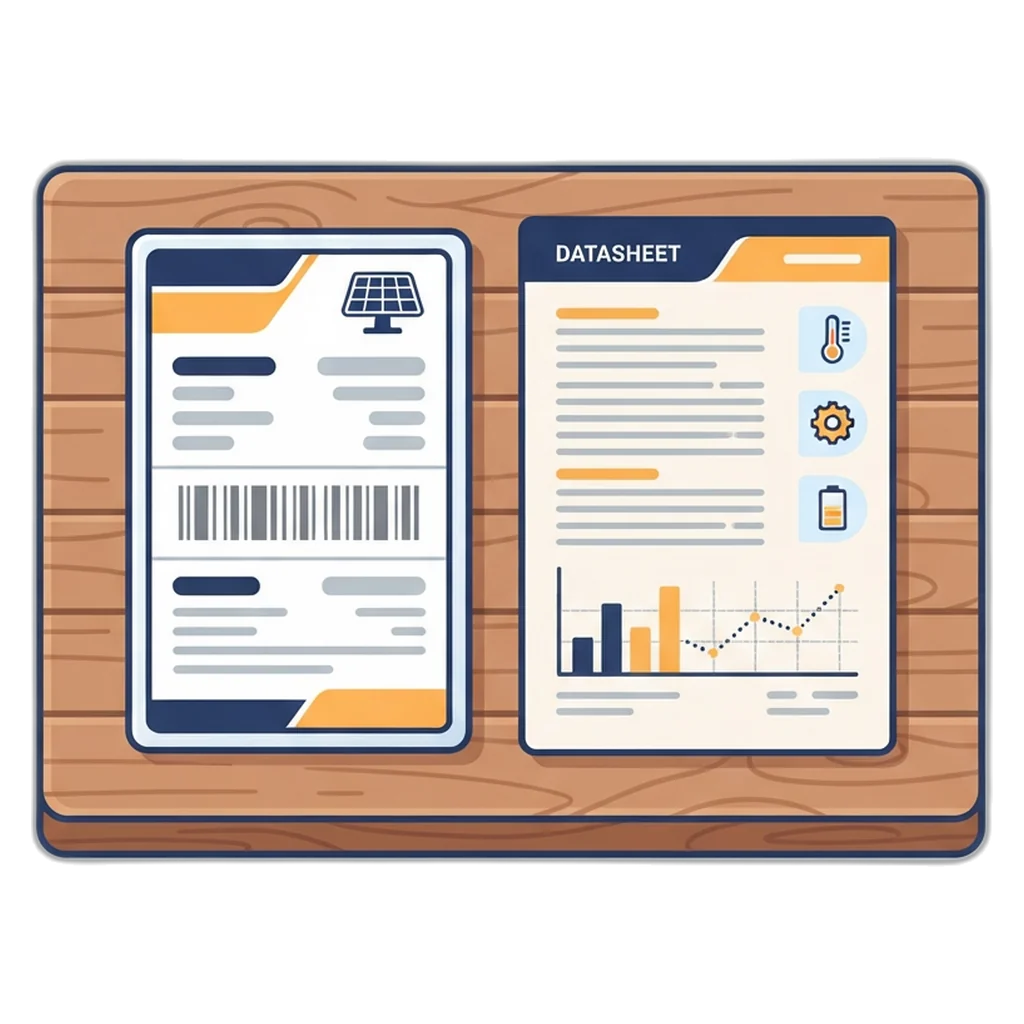
| Datasheet | An official PDF from the maker that matches the exact model on the label: watts, voltage, current, size and certifications | You need these numbers to design strings, match the inverter and confirm the product is genuine |
| Written warranty | A warranty document from the maker that names the model, the term and how to file a claim | A spoken promise from a seller cannot be enforced once the seller is gone |
| Local support | A Philippine distributor or service partner that handles claims and keeps spare parts | Sending a failed inverter abroad for repair can leave you without power for a long time |
| Track record | Years in the market, a working website, published manuals and firmware updates | A maker that has lasted this long is more likely to still exist when you need a claim |
| Standards | Test certificates such as IEC 61215 and IEC 61730 for panels and IEC 62109 for inverters | Shows the design passed recognized lab tests, not only the factory’s own claims |
These are buyer checks, not a guarantee. A good brand can still ship a damaged unit, and a good unit can still be installed badly.
What a known brand gives you, and what it does not
A known brand usually means steady factory quality, published specs and a warranty process that works in practice.
What a brand cannot do is fix a poor design. A wrong cable size or a roof mount that lifts in a typhoon will fail no matter whose logo is on the panel. Even the best solar panel brand is only one part of a good system; sizing and installation are the rest. Our solar panel calculator helps with sizing.
You may also pay more per watt for a recognized name. In the end, the best solar panel brand is the one you can actually get help from in your province.
Warranty in Writing: Product vs Performance
Any maker that wants to be called the best solar panel brand should hand you two kinds of panel warranty, and they cover different things, so read both lines on the warranty document.
| Point | Product warranty | Performance warranty |
|---|---|---|
| What it covers | Defects in materials and workmanship, such as a failed junction box or delamination | Power output: the panel must still make a stated percentage of its rated watts after a stated number of years |
| How it is written | A number of years from the purchase or installation date | A schedule: a first-year limit, then a yearly drop allowance, ending at a final percentage |
| What you need to claim | Proof of purchase, the serial number and photos of the defect | Proof of purchase, the serial number and a test showing the shortfall, usually done by a technician |
Check the term and percentage on the maker’s own document for your exact model.
Inverters and batteries have separate warranties, often with conditions such as cycle limits or online registration. Ask who in the Philippines processes the claim.
A simple rule: if the warranty only exists as a line in a chat message, you do not really have a warranty. A “best solar panel brand” claim without a warranty document is just advertising.
Test Standards and Marks to Look For
Standards tell you that a product type was tested by a lab against a public set of rules. They do not prove which maker is the best solar panel brand, but a product with none of them is a warning sign. These are the main ones to look for on a datasheet:
- IEC 61215 covers design qualification for panels: repeated heat, humidity, freezing, mechanical load and hail tests meant to reveal weaknesses that would show up over years outdoors.
- IEC 61730 covers panel safety: electrical insulation, fire behavior and protection against shock.
- IEC 62109 covers the safety of power converters used in solar systems, such as inverters and charge controllers.
Check that the certificate lists your model. ISO 9001 alone is not a product test; it covers factory processes.
For batteries, ask for the cell chemistry and the battery management system (BMS) details. The common chemistry for home solar batteries is lithium iron phosphate (LiFePO4), which handles deep daily cycling better than lead-acid. Our solar battery guide explains usable capacity and how to size a battery for brownouts.
In the Philippines, the DTI Bureau of Philippine Standards (BPS) runs product certification. As of mid-2026, its rules for solar parts were still in draft, so check the BPS list of products under mandatory certification for your item.
What “Tier 1” Really Means
Many sellers advertise “Tier 1 panels” as if it settles the question of the best solar panel brand. The phrase comes from a list published by BloombergNEF, an energy research company. It groups panel makers by bankability: whether banks and large lenders have financed big solar projects using that maker’s panels.
That makes Tier 1 a measure of financial track record, not a quality score. It says nothing about a specific model or whether a panel is genuine. Treat it as a hint that a maker is established, then do the real checks.
Well-Known Makers to Shortlist, by Category
DIYers often ask for a best solar panel brand list that also covers inverters and batteries. Below are global manufacturers widely known in the solar trade. Treat them as names to shortlist and check, not a verdict. We leave out specs and prices because models change often and local stock varies.
| Category | Well-known makers | What to check before buying |
|---|---|---|
| Solar panels | Canadian Solar, JA Solar, JinkoSolar, LONGi, Trina Solar | Datasheet for the exact model, panel warranty document, serial lookup, local distributor |
| Inverters (grid-tied and hybrid) | Deye, Growatt, Huawei, SMA, Solis, Sungrow | Grid-tied or hybrid type, voltage window for your strings, local service partner, app and firmware support |
| Batteries | BYD, Dyness, Pylontech | Support by your inverter, usable capacity, battery warranty terms, BMS communication |
| Charge controllers (off-grid DC) | EPEver, Victron | MPPT or PWM type, maximum PV input voltage and current, settings for your battery type |
Listed alphabetically or by category, no ranking; check the local distributor and current models. Being on this table is not an endorsement of any product.
Best inverter brand: fit first, logo second
When people ask for the best inverter brand, the real question is which inverter suits their setup. A grid-tied inverter shuts down during a brownout to protect line workers, so it gives no backup power. A hybrid inverter can keep running from a battery. This plain-language overview of solar inverters explains the main types.
Also check that the inverter’s maximum PV voltage, MPPT range and input current fit your panel strings. Two famous names can still be a poor pair if the numbers do not line up. Our inverter buying guide shows how to check those limits.
Best solar battery brands: compatibility matters most
With the best solar battery brands, compatibility beats reputation. Many hybrid inverters only support batteries on an approved list; an unsupported battery may charge without proper control, shortening its life or voiding the warranty.
Panels: why the gap between big names is small
Large panel makers sell similar monocrystalline panels today, so the gap between two big names is usually smaller than the gap between a real panel and a fake one. For many buyers, the best solar panel brand in the Philippines is simply the big name with the best local support. Our guide to the types of solar panels explains mono, poly and thin-film in plain words.
Warning Signs of Fake or Relabeled Solar Products
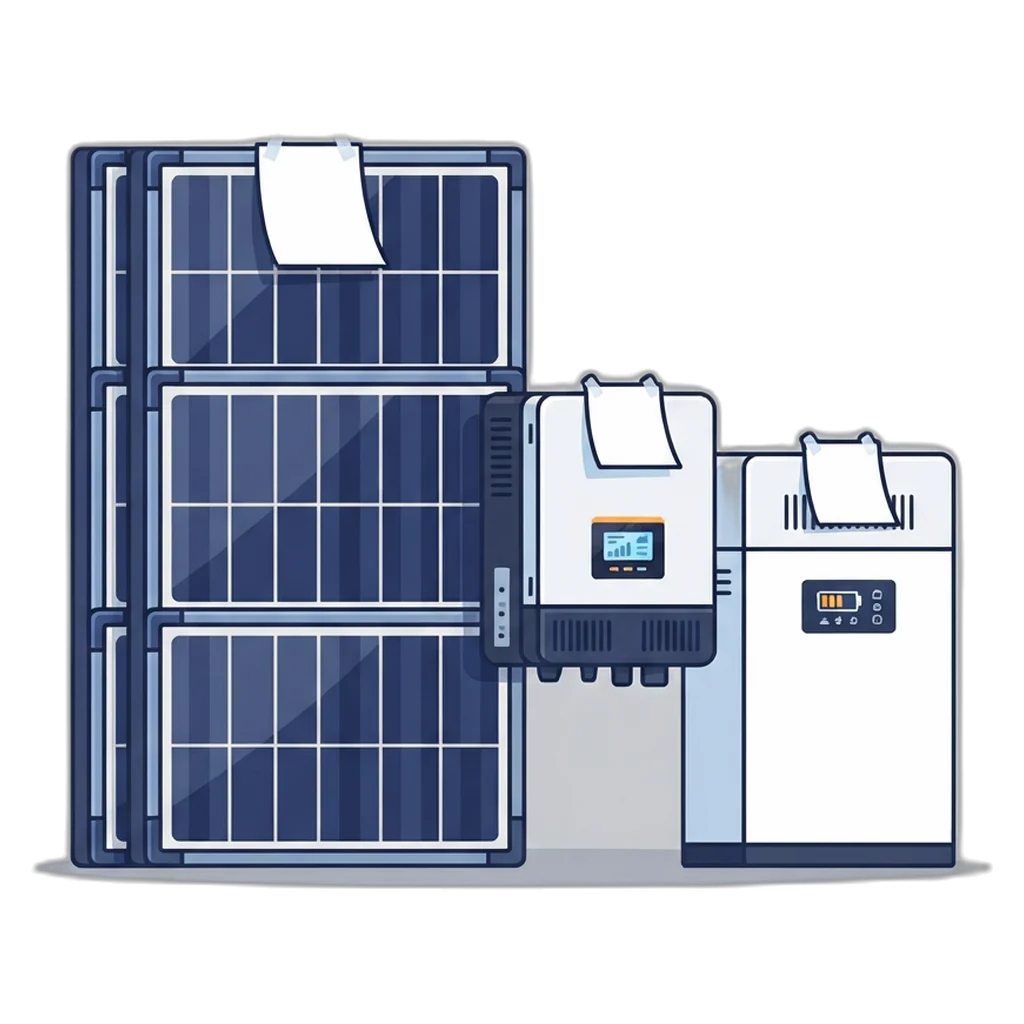
A relabeled panel is usually a real panel with a new sticker that claims a higher wattage or a more famous name. Even the best solar panel brand can be copied, so watch for these signs.
| Warning sign | Why it is a problem | What to do |
|---|---|---|
| Wattage too high for the panel size | Panel power depends on area and cell efficiency, so a small panel cannot make big-panel watts | Measure the panel and do the efficiency math below |
| No datasheet, or one without the maker’s name | You cannot check specs, certificates or warranty terms | Ask for the official PDF and walk away if there is none |
| Serial number missing, scratched off or unknown to the maker | Genuine makers can trace their serial numbers; copies cannot | Check the serial with the maker before paying in full |
| Price far below other sellers | Very low prices can mean used, rejected or relabeled stock | Compare price per watt across several sellers |
| Label that peels, smudges or looks home-printed | A label meant to last outdoors for years should not wear off in your hands | Compare it with label photos on the maker’s website |
| Seller cannot name a local distributor | No one in the country may handle a warranty claim | Ask in writing who processes claims in the Philippines |
Quick math: is the wattage even possible?
Panel ratings assume 1,000 watts of sunlight per square meter, so a tape measure can test a claim.
Example: a panel sold as “600 W” measures 1.0 m × 1.2 m = 1.2 m². Efficiency = 600 W ÷ (1.2 m² × 1,000 W/m²) = 50%. No silicon solar panel can reach that, so the label is wrong.
If the label and the math disagree, trust the math.
How to Verify a Brand Before You Pay
Before you trust any “best solar panel brand” label, follow these steps for every panel, inverter and battery in your quote, whether you buy from a shop, an online seller or an installer.
- Get the exact model number, not just the brand.
- Download the datasheet from the maker’s official website and compare size, weight and watts.
- Check the serial number with the maker or its local distributor.
- Ask for the warranty document and the name of the Philippine distributor or service partner that handles claims.
- Look for marks where they apply. The BPS page on PS and ICC marks shows what they look like.
- Inspect on delivery and photograph every serial number before installation.
Hiring someone? Our guide to the best solar installers and how to judge them covers workmanship and permits.
On your phone: checking a serial number
- Photograph the nameplate label in good light and zoom in to read the model, serial, Voc and Isc clearly.
- Scan the barcode to read the serial, but do not trust a website that a sticker’s QR code opens. Type the maker’s official address into your browser instead.
- Save the datasheet PDF, warranty document and receipt in one phone folder or cloud drive.
- Email the serial numbers to the maker’s support address for a dated record.

Choosing a Brand for Philippine Conditions
The best solar panel brand on paper still has to survive Philippine weather. Before you settle on a model, read its datasheet with local conditions in mind:
- Heat. Panels lose power as they get hot. A temperature coefficient closer to zero means less loss.
- Typhoons. Check the mechanical load rating on the datasheet and ask which mounting rails and clamps the installer will use. PAGASA explains its tropical cyclone wind signals; inspect the array after every strong storm.
- Salt air and humidity. Near the coast, ask whether the panel passed a salt mist test such as IEC 61701. In the rainy season, sealed junction boxes and good connectors matter even more.
- Brownouts. If backup is the goal, the inverter and battery brand matter as much as the panel brand, because a grid-tied system without a battery shuts off when the grid does.
- Service outside Metro Manila. In the Visayas and Mindanao, ask where the nearest service partner is and how long a replacement takes. Net metering goes through Meralco or your electric cooperative.
Peak sun hours in the Philippines are typically about 3.5 to 5 hours a day, depending on place and season. Even the best solar panel brand cannot change that, so size the system on real local sun.
Where JH Solar Fits
JH Solar offers all-in-one solar systems: the hybrid inverter and battery share one cabinet, and the package includes panels, mounting hardware, electrical parts and installation. JH Solar Version 1 is rated 7 kW with a 16.38 kWh battery and uses 6 panels of620 W (3.72 kWp). JH Solar Version 2 is rated 11 kW with a 15.36 kWh battery and uses 14 panels of 720 W (10.08 kWp).
We do not name component brands here. If you want them, ask us and we’ll list the panel and component models in your quote, with their datasheets, so you can run the same checks. Version 2 carries a 10-year hardware warranty; exact coverage is written into your quote, as are the Version 1 warranty terms. Unit prices are ₱120,000 for Version 1 and ₱150,000 for Version 2, unit only; panels, mounting, wiring, labor and permits are quoted after a site assessment.
Safety and Electrical Reminders
- Never open a panel junction box or a battery case to “check the brand inside.” A panel makes voltage whenever light hits it, and a battery is always live, even when the system is switched off.
- Fake or relabeled panels may have weak bypass diodes or poor insulation, which can overheat. If a panel’s label fails the size-to-watts math, do not install it.
- Use only batteries with a working battery management system, and only with an inverter or charge controller that supports that battery.
- Inverter, grid-tied and net-metering connections must be done by a registered master electrician or professional electrical engineer.
Solar panels make DC power whenever light hits them, and batteries hold enough energy to start a fire if they are shorted. Work on the grid side, the AC panel board or a net-metered system belongs to a licensed electrical practitioner following the Philippine Electrical Code. Our numbers are estimates, not a design or a quote.
Frequently Asked Questions
Is there one best solar panel brand in the Philippines?
No single name wins for every home. The best solar panel brand for you is one whose exact model has an official datasheet, a written warranty, a serial number the maker can confirm and a local distributor who handles claims. Two buyers can pick different makers and both choose well if those checks pass.
Does a Tier 1 label mean the panel is high quality?
Not directly. Tier 1 refers to a BloombergNEF list that groups panel makers by bankability, meaning lenders have financed large projects using their panels. It describes the company’s financial track record, not the quality of one model or batch, and it cannot tell you whether the panel in front of you is genuine.
Are cheap unbranded panels from online shops always fake?
Not always, but they carry more risk. Some are honest small-factory panels sold at their true rating; others are relabeled with a higher wattage or a famous logo. If the seller cannot give a datasheet, a warranty document and a checkable serial number, treat the rating as unproven.
Should my panels, inverter and battery all come from the same brand?
They do not have to. Panels from one maker work with an inverter from another as long as the string voltage and current fit the inverter limits. Batteries are different: many hybrid inverters only support batteries on their compatibility list, so match the battery to the inverter first and the brand second.
Is BPS certification required for solar panels in the Philippines?
As of mid-2026, product certification rules for solar parts under the DTI Bureau of Philippine Standards were still in draft, so do not assume it is required for every item. Check the current BPS list of products under mandatory certification and look for PS or ICC marks where they apply to the product you are buying.
How long should a good solar brand support its products?
At least as long as the warranty you are paying for. Look for a maker that publishes manuals and firmware updates, keeps old datasheets online and has a Philippine service partner. Ask the seller how long they have carried the brand and how claims are handled.
Conclusion: Paperwork and People Make the Best Brand
There is no single best solar panel brand that wins for every Filipino home. The right choice is a maker whose exact model comes with an official datasheet, a written product and performance warranty, a serial number you can confirm and a local partner who will answer when something fails.
Use the well-known makers above as a shortlist, not a ranking, and check current models with the local distributor. Do the size-to-watts math and verify serial numbers on your phone. That protects you better than any logo.
Want model numbers in your quote?
Tell us about your home and your bill. Ask us and we’ll list the panel and component models with their datasheets; the price is confirmed after a site assessment.
Related Guides
- JH Solar HomeStart here: JH Solar systems and every guide on one page.
- Types of Solar PanelsMono, poly, bifacial, flexible: which panel suits your roof.
- Solar Battery GuideHow much battery you need for nights and brownouts.
- Best Solar InstallersPick a provider, or a budget option, without regrets.
- Solar Panel Price PhilippinesPanel, battery and installation costs, line by line.